Awama / Luqaimat
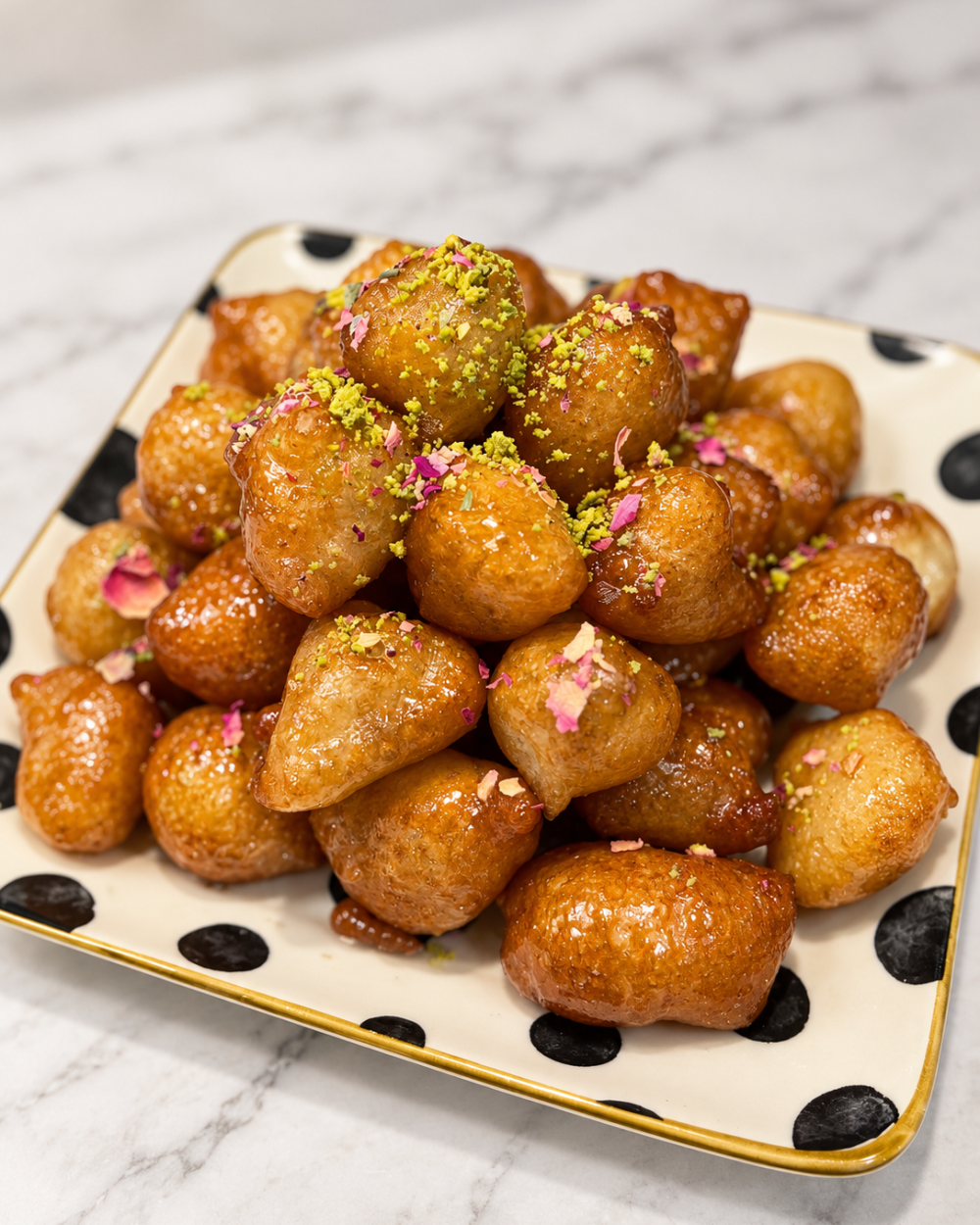
Golden little dough balls soaked in syrup are a sweet ending to a shared meal. Awama, also known as luqaimat, have a crisp outside and a soft, airy center that catches the syrup with every bite. The ingredients are simple, and shaping them gets easier as you fry a few batches. Bring them to the table freshly made, while the contrast between the crunchy shell and syrupy center is at its best.
Recipe
Awama / Luqaimat
Awama, also known as luqaimat, have a crisp outside and a soft, airy center that catches the syrup with every bite. The ingredients are simple, and shaping them gets easier as you fry a few batches.
Scale
Ingredients
Dough
- 1 cup all-purpose flour
- 1 cup warm water
- 1 teaspoon yeast
- 1 teaspoon sugar
- 1/2 tablespoon cornstarch
- Oil, for frying
Simple Syrup
- 2 cups white sugar
- 1 1/4 cups water
- About 1 teaspoon fresh lemon juice
Instructions
- Prepare the dough.
- In a bowl, mix the flour, yeast, sugar, and cornstarch.
- Gradually stir in the warm water until smooth. The mixture should be a thick, sticky batter suitable for dropping from a spoon.
- Cover and let rise in a warm place for about 1 hour, until puffy and bubbly.
- Make the syrup.
- While the dough rises, combine the sugar, water, and lemon juice in a saucepan.
- Heat gently, stirring just until the sugar dissolves. Bring to a boil, then stop stirring.
- Reduce the heat to low and simmer for 5 minutes. Remove from the heat and let cool completely.
- Heat the oil.
- Pour about 2 inches of oil into a deep, heavy pan, leaving plenty of room above the oil. Heat over medium heat to approximately 340–350°F, adjusting the burner as needed to maintain the temperature.
- Shape the dough balls.
- Gently stir the risen batter to release large air pockets.
- Using two lightly oiled teaspoons, scoop small portions and carefully slide them into the oil.
- Alternatively, transfer the batter to a piping bag. Pipe small portions close to the oil’s surface, snipping with lightly oiled kitchen scissors. Keep your hands and the bag away from the hot oil.
- Fry until golden.
- Fry a few at a time, turning frequently so they color evenly. Cook until deeply golden and crisp, about 3–5 minutes depending on size.
- Lift out with a slotted spoon and briefly let the excess oil drain.
- Soak in syrup.
- Immediately transfer the hot awama into the cooled syrup. Turn gently for 2–3 minutes, until well coated.
- Lift out, drain excess syrup, and serve immediately.
Connie’s notes
- Use warm water, not hot. Hot water can damage the yeast.
- Check the batter’s consistency. Flour absorbs water differently. If the batter is too runny to form small mounds, mix in a little flour; if too stiff to drop from a spoon, add water a teaspoon at a time.
- Let it become bubbly. A cool kitchen may mean the dough needs longer than 1 hour to rise.
- Start with a small test batch. Fry two or three balls to practice shaping and check that the centers cook through.
- Keep the portions small and even. Large balls take longer to cook and may brown before the centers are ready.
- Control the oil temperature. Oil that is too cool makes the dough greasy; oil that is too hot browns the outside too quickly.
- Turn frequently. This helps the balls develop an even golden crust.
- Use cooled syrup with hot awama. Have the syrup ready before frying.
- Adjust the soak to your preference. A 2–3-minute soak gives a syrupy result; a shorter dip preserves more crunch.
- Enjoy fresh. The coating gradually softens as it absorbs syrup, so these are best served shortly after frying.
Did you make it?
Ratings help other people decide whether to try it — and they tell me which recipes are worth doing more of. It takes ten seconds.
↓ Leave your rating